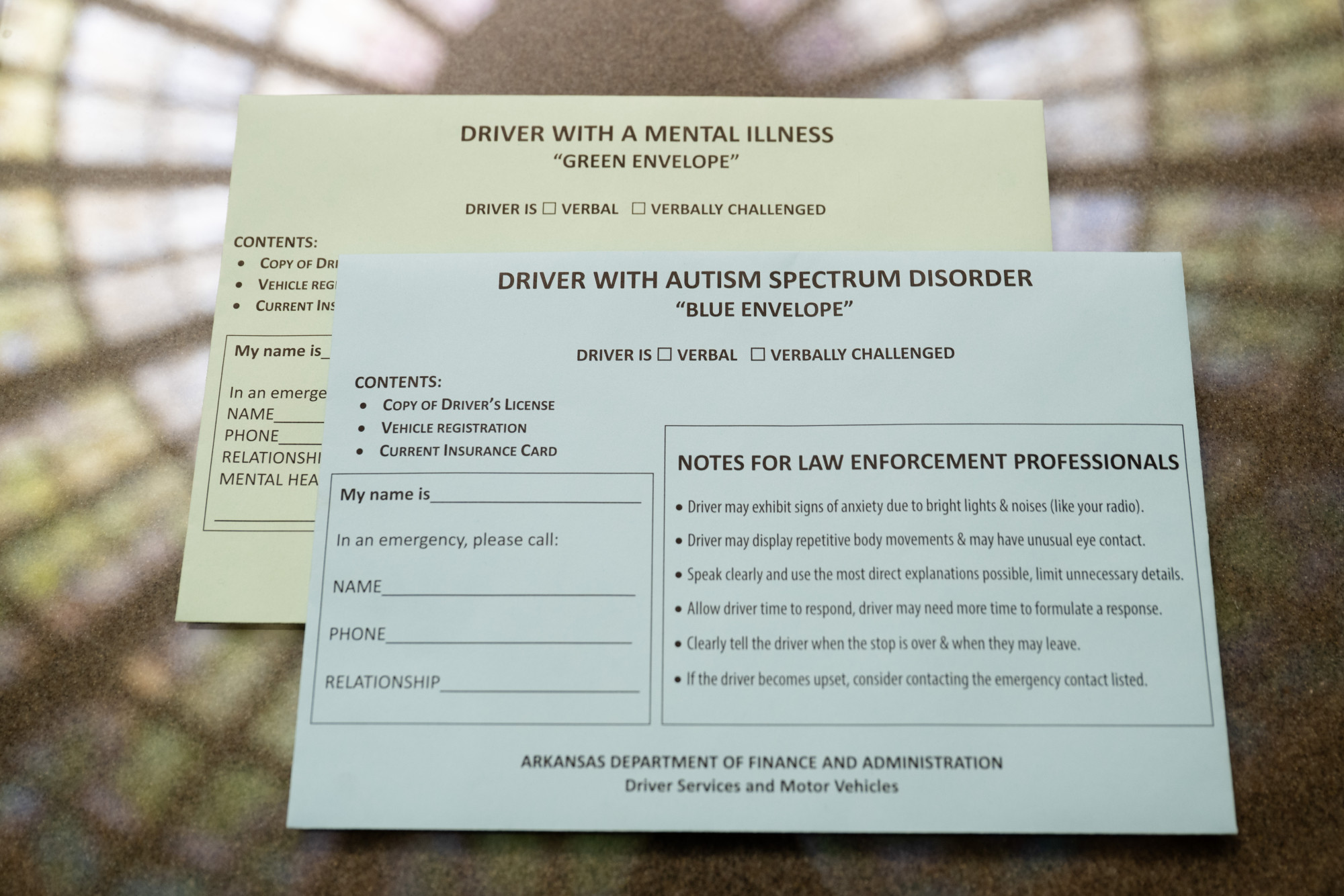
Beginning January 2, Arkansas drivers will have access to two new programs designed to make traffic stops safer, calmer, and more effective for individuals with mental illness or autism. The Green Envelope Program and the Blue Envelope Program, both passed during the 2025 Regular Session of the Arkansas General Assembly, focus on improving communication between drivers and law enforcement during motor vehicle interactions.
The Green Envelope Program, established under Act 531, is available to individuals diagnosed with a mental illness. It provides a specially designed green envelope to hold essential documents such as a driver’s license, registration, and proof of insurance. In addition to organizing paperwork, the envelope serves as a clear visual signal to law enforcement that the driver may experience heightened anxiety or communication challenges. The envelope also includes guidance for officers on best practices for interaction, as well as simple instructions for drivers on how to present their documents and what to expect during a stop.
The Blue Envelope Program, created under Act 16, is designed for individuals with autism spectrum disorder. The blue envelope similarly holds essential documents and helps ease communication by alerting officers that the driver may process information differently, need extra time, or benefit from clear, direct instructions. Like the green envelope, it contains notes for law enforcement on effective ways to interact, along with step-by-step guidance for drivers to help reduce confusion and stress. Both programs are intentionally easy to access. Drivers may request a green or blue envelope at any of the more than 130 Revenue Offices across the state or order one online. There is no documentation required to obtain the envelope.
By combining clear visual cues with practical guidance for both drivers and officers, the Green and Blue Envelope Programs promote understanding, reduce anxiety, and enhance safety. As these programs become available statewide for the first time this January, they represent a meaningful step toward more compassionate and effective interactions on Arkansas roadways.